Campsie High Kirk in context
David Hamilton - The Father of Scottish Architecture in the West of Scotland
The reason Glasgow's heritage architecture looks the way it looks
David Hamilton was arguably the most prolific architect in Scotland of his time; many of his buildings have been lost already, mostly in the first half of the 20th century. He is described as ‘the father of the profession’ for architecture in the West of Scotland and designed at the pivotal moment in the industrialisation of Scotland when his home city (Glasgow) became the largest settlement in Scotland.
In Glasgow the Royal Exchange building he designed is looked after by Glasgow City Council as GoMA, his Hutcheson’s Hospital building was restored by the Glasgow Building Preservation Trust in 2014. In 2008 They worked with the Cassiltoun Trust to restore the category B-listed Castlemilk Stables that he designed. (This trust was founded in 2000).
Hamilton mausoleum that he designed had the longest recorded reverb in the world, and is a cultural attraction run by South Lanarkshire Council. Falkirk steeple that he designed is now permanently open as a heritage attraction since 2023 after a restoration beginning in 2013, Also there is no permanent exhibition about this architect. His drawings are well preserved in archives. There's a marble bust of him in Glasgow city's collection.
The last public exhibition about his work was at the Hunterian Museum in 1995. Twenty-seven of his surviving buildings are category A-listed and the rest of his surviving buildings (around twenty-five) are category B-listed. Legacy at risk: Six of his buildings (and one building in his style), are currently on the buildings at risk register.
Three of these are in East Dunbartonshire. Three of the buildings designed by Hamilton on the buildings at risk register are category A listed. The most recently added is 15-19 Royal exchange square in Glasgow, added in 2014. Lennox Castle is another A listed building, added to the buildings at risk register in 1992, and is currently at the highest at risk category; critical. Campsie High Church is the other A listed building he designed that is on the buildings at risk register. This has been on the buildings at risk register since it was founded in 1990.
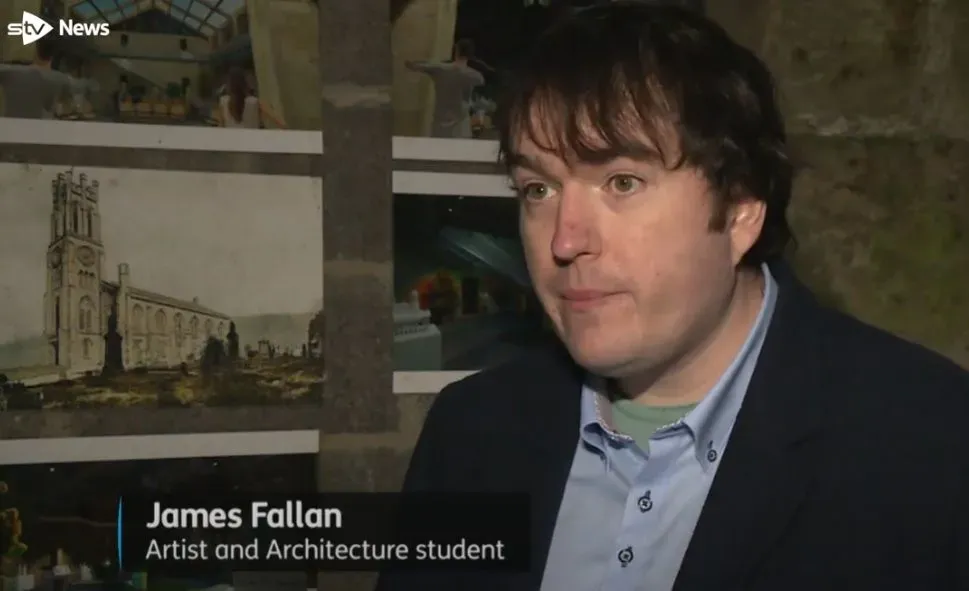
Out of East Dunbartonshire’s total of fifteen category A-listed buildings, Campsie High Church and Lennox Castle, both in Lennoxtown, are the only category A-listed buildings in the local authority on the buildings at risk register. 1 Campsie High Kirk: James Fallan Campsie High Church is the only church building designed entirely by David Hamilton to have a category A-listing. Its design is unique and unusual for the period, blending gothic detail with classical proportions.
MacKechnie emphasises this with the contrasting gothic interior of the narthex emphasised by its ribbed ceiling and the sanctuary which was “classical in character” with a “classical ceiling with a decorative centre rose, U-plan gallery with smooth, streamlined front, also classical in character.” “Campsie High is a far larger and grander version, its steeple soaring, yet particularly solid statement, with distinctive pinnacles almost of domestic rather than ecclesiastical character.” Aonghus MacKechnie 1993 The steeple design was unique to this building, all of Hamilton’s other gothic church buildings use a template for pinnacles from the typical “English village church”. At Campsie the steeple incorporated pinnacles which were more austere, and implied exaggerated crenelations. This relates to the gothic revival and romantic movement with “castellation” and also draws on the austerity of the neoclassical architecture of the age.
The top quarter of this steeple was lost in the fire, it is the aim of FoCHK to reinstate this feature as a line drawing in light above the existing sandstone tower.
According to East Dunbartonshire Council’s ‘Historic Environment Planning Guidance Note’ the listing of this building applies to: “Buildings of national or international importance, either architectural or historic, or fine little-altered examples of some particular period style or building type;” This building has had this listing since 1973.
Out of his fourteen church building designs, other than Campsie High Church, Bothwell Parish Church (which incorporates a medieval church building) and Lecropt Kirk (Designed primarily by William Stirling with input by David Hamilton) are category A listed. Seven are category B-Listed, including Cadder Parish Church in East Dunbartonshire.
Four of his church buildings have been demolished, these were all of the churches he designed in central Glasgow. Pivotal decisions: The degradation of Campsie High Kirk through vegetation growth and graffiti/vandalism threaten this unique and outstanding example of Hamilton’s work.
Currently this building is no longer illuminated at night and is closed off as a standing ruin, its potential to serve the local community and bring in revenue for maintenance is unrealised. The future of this under-utilised heritage asset has significant implications for East Dunbartonshire and Scotland’s built heritage.
With the only other A-listed building in the local authority on the buildings at risk register being by the same architect and in the same village, combined with the sheer length of time that Campsie High Church has been on the buildings at risk register, highlights what the strategic importance of conserving this building with a sustainable future is for the built heritage of East Dunbartonshire.
As the only church building designed entirely by David Hamilton that is A-Listed and being still on the buildings at risk register since it was founded, this emphasises the national importance of this outstanding building and the necessity of preserving it for future generations
Lorem Duis aute irure dolor in reprehenderit in voluptate velit esse cillum dolore eu fugiat nulla pariatur. Excepteur sint occaecat cupidatat non proident, sunt in culpa qui officia deserunt mollit anim id est laborum.