Welcome to the Friends of Campsie High Kirk
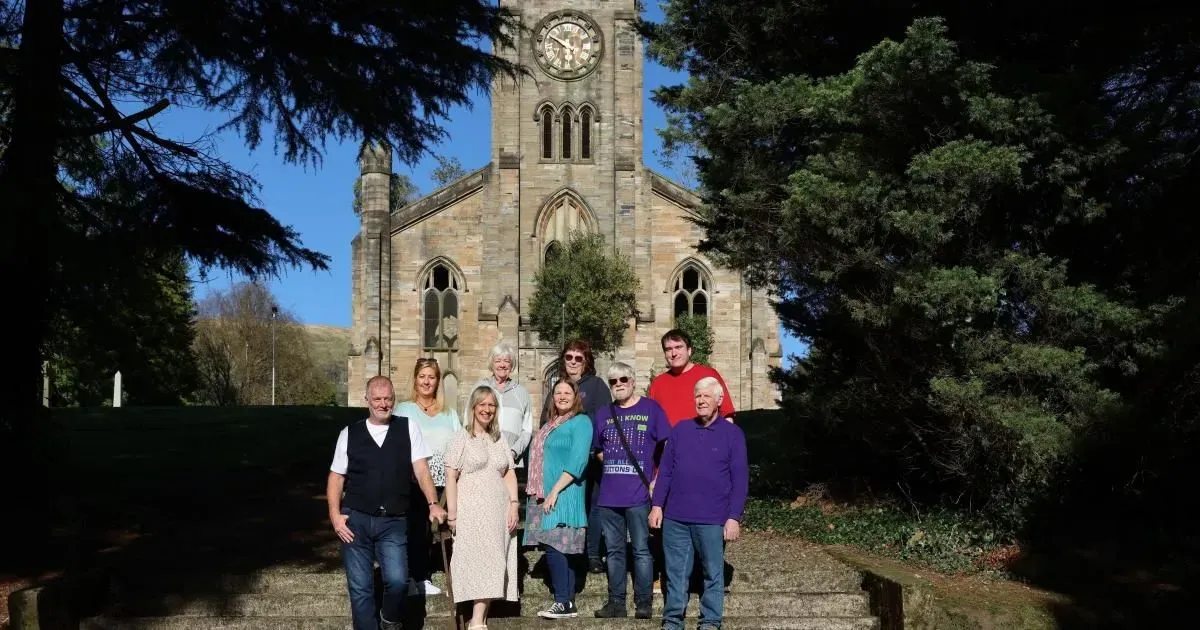
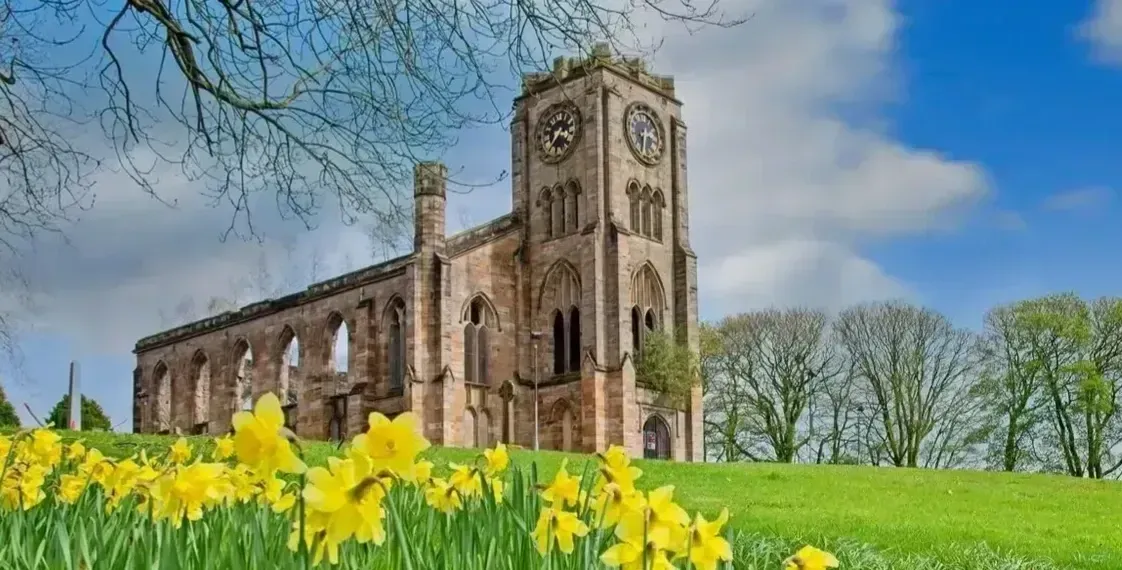
Beneath the sweeping Campsie Fells, above the streets of Lennoxtown, stands a building that still stops you in your tracks. Campsie High Kirk is a magnificent ruin: its roof has gone, the sky opens above its stone walls, and its surviving tower remains a familiar landmark against a breathtaking backdrop. Here, within easy reach of Glasgow, an extraordinary piece of Scotland’s heritage is waiting to begin a new life. We are the Friends of Campsie High Kirk, and we invite you to become part of its story.
Designed by David Hamilton, the architect behind Glasgow’s Royal Exchange, now the Gallery of Modern Art, the Kirk was built in 1828 and opened for worship in December that year. A contemporary report in the Caledonian Mercury records the opening, describing the new Gothic church as capable of holding 1,560 people. Its Gothic architecture brought ambition and beauty to a growing community. With Kincaid House and Lennox Castle nearby, it connects Lennoxtown to the work of one of Scotland’s great architects. Today, the A-listed building still gives the village a powerful sense of place, drawing the eye from its streets towards the hills beyond.
The story surrounding it reaches much further back. Across Greater Campsie, prehistoric discoveries and the nearby Roman frontier open a window onto thousands of years of human life. At Clachan of Campsie, beneath the entrance to the Glen, traditions of St Machan recall the area’s early Christian roots; a church is recorded there in the twelfth century. The old churchyard, paths and wooded glen belong to a landscape where faith, work and everyday life have left their traces across generations.
Campsie also has a place in the story of democracy. Thomas Muir of Huntershill, the eighteenth-century reformer, had family roots at Birdston, near Milton of Campsie. His friend and fellow supporter of reform, John McFarlan of Ballencleroch, lived at Campsie Glen. Their connections place this landscape within the wider exchange of ideas about representation and people’s right to have a voice. That history gives particular meaning to what is happening at the High Kirk today: local people taking responsibility for a shared future.
From a roofless ruin to a place of possibility
The Kirk served its community until 1976. Fire devastated the building in 1984, and decades of uncertainty followed. Yet the affection people felt for it endured. The Friends of Campsie High Kirk (FoCHK), a registered Scottish charity, have brought that commitment together around a practical ambition: to safeguard the ruin and return it to the life of the community.
In 2025, the Kirk passed into community ownership through the Ownerless Property Transfer Scheme of the King’s and Lord Treasurer’s Remembrancer (KLTR). This was a turning point. A building that had stood without a secure future became a place whose next chapter could be shaped by the people around it. Consultation, feasibility work and professional advice are helping turn that opportunity into a phased plan.
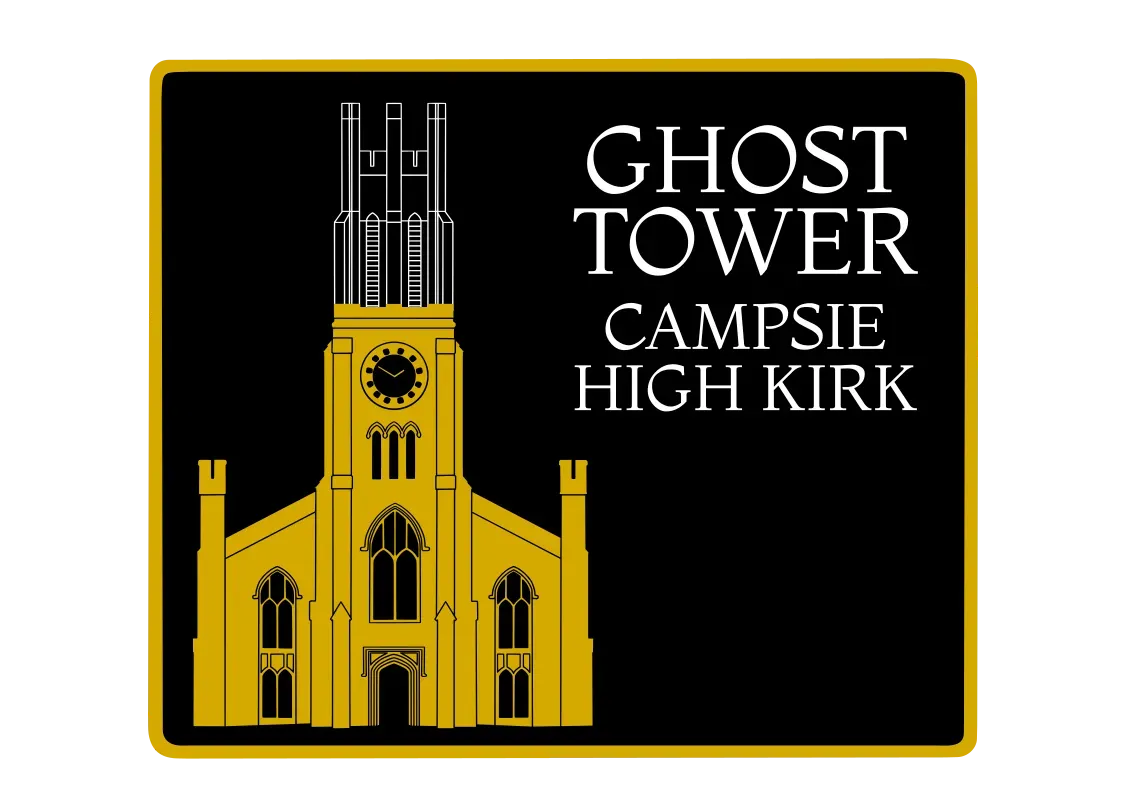
We envisage a welcoming setting for heritage, culture, learning, community gatherings and events, with space for a Celtic Garden and quiet reflection. The proposed Ghost Tower would recall the lost tower through an illuminated outline, bringing a new presence to the skyline. Imagine the historic stonework below and a tower of light above: a beacon for Lennoxtown, visible evidence of a community’s confidence, and an invitation to the world to discover Campsie. These are proposals to be developed as funding, permissions and conservation work allow, beginning with the care and safety of the building itself.
Visit Campsie — a place to live, thrive and visit
The High Kirk is the heart of our project, but its potential reaches beyond its gates. From Kilsyth through Milton of Campsie and Lennoxtown to Strathblane, the Campsie Corridor connects communities beneath some of Scotland’s most spectacular Lowland scenery. Volcanic hills, wooded glens and open views give this landscape its drama. The Campsies lie south of the Highland Boundary Fault, with Loch Lomond and the Trossachs within reach, while Glasgow and Stirling connect the area to city life, visitors and the wider world.
Our approach to regeneration begins with the belief that restoring a much-loved landmark can help renew the places around it. A visit to the Kirk could become a walk in Campsie Glen, time in a village café, an encounter with local history, or a longer stay exploring Mugdock, the hills and Carron Valley. Connecting these experiences can bring opportunities for local businesses, learning, employment and wellbeing. Through the Campsie Corridor Collective, we want residents, community groups, businesses and public bodies to communicate, collaborate and contribute to that shared future.
For us, the High Kirk can become a key to the Campsie Corridor: a place to arrive, discover the area and understand why it matters. Whether Campsie is your home, a place you remember, or somewhere you have yet to discover, we welcome your interest, ideas and support. Come and see the landscape that inspired this ambition, explore the plans, and help us give this remarkable building a future worthy of its setting.
Please contact us for current access arrangements before planning to enter the Kirk site.
Discover the plans for the Kirk
Image of Campsie High Kirk © Ronnie Shephard
Campsie High Kirk on STV News
Watch STV’s coverage of Campsie High Kirk and its future as a community space.