Watch Our Videos
Check out our videos to learn more about what we do.
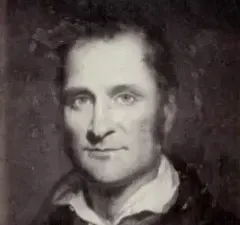
David Hamilton (1768–1843)
Father of Architecture in the West of Scotland
David Hamilton and the Campsie Connection
Few individuals have shaped the architectural identity of Scotland more profoundly than David Hamilton (1768–1843). Born in Glasgow in 1768, Hamilton died on 9 December 1843 and is buried in the Glasgow Necropolis, the great Victorian city of monuments and memory whose wider architectural composition he himself helped influence.
Often referred to as the “Father of Architecture in the West of Scotland”, Hamilton helped define the appearance of nineteenth century Glasgow and left behind one of the most remarkable architectural legacies in Scottish history.
Historical records place Hamilton living and working within Glasgow during the city’s great expansion period, including premises connected to South Hanover Street and the commercial centre of the city, placing him directly within the rapidly transforming urban landscape he helped create.
His work spanned grand civic buildings, churches, castles, terraces, bridges, hospitals, monuments, mausoleums and country houses during one of the most transformative periods in Scotland’s industrial, cultural and civic expansion. Through his architecture, Hamilton helped express the growing confidence, ambition and identity of a rapidly changing nation.
Yet despite his extraordinary contribution, there has never been a major long term public celebration dedicated specifically to David Hamilton’s legacy.
That is one of the reasons why Friends of Campsie High Kirk believe Campsie and Lennoxtown are uniquely placed to help change that.
Why Hamilton Came to Campsie and Lennoxtown
Hamilton’s connection to Campsie and Lennoxtown did not happen by accident. It emerged through the rapid transformation of the Campsie area during the late eighteenth and early nineteenth centuries, when wealthy industrialists, merchants and landed families increasingly looked north from Glasgow toward the Campsie Fells as a place of prestige, retreat and estate development.
The area’s dramatic landscape, proximity to Glasgow and growing industrial importance brought significant investment into Campsie during Hamilton’s lifetime. As Glasgow’s leading architect, Hamilton naturally became associated with major commissions connected to influential landowners and expanding civic ambition.
The three surviving Hamilton landmarks within the Campsie area appear to reflect this wider relationship between Glasgow’s emerging elite, landed estate development and Hamilton’s growing reputation as Scotland’s foremost architect.
Campsie High Kirk
Campsie High Kirk was commissioned during a period of enormous industrial and population growth connected to Lennoxtown’s expanding printworks, mills and associated industries.
The existing parish church had become inadequate for the rapidly growing local population and a far grander replacement was sought, one capable not only of serving the community but also reflecting the increasing confidence and importance of the area itself.
By the late 1820s, David Hamilton had already established himself as one of Scotland’s leading architects through major Glasgow commissions and ecclesiastical work across the west of Scotland. He was therefore the natural choice for a project of such ambition and prominence.
The result was extraordinary.
Completed in 1829 and positioned dramatically above Lennoxtown against the backdrop of the Campsie Fells, the Kirk dominates the landscape in a way few churches in Scotland do. Even in ruin, following the devastating fire of 1984, its scale, silhouette and commanding Gothic form remain breathtaking.
Architectural historian Aonghus MacKechnie described the Kirk as a “far larger and grander version” of Hamilton’s earlier church work, with a tower that “soars” above the landscape.
Importantly, Campsie High Kirk is unique within Hamilton’s portfolio. It is believed to be the only church designed entirely by David Hamilton to hold Category A listed status.
Lennox Castle
Hamilton’s involvement with Lennox Castle emerged through his work for the Lennox family and the wider estate ambitions developing around Campsie during the early nineteenth century.
Commissioned for John Lennox Kincaid Lennox of Woodhead, the castle was designed as a romantic castellated mansion overlooking the Campsie landscape. Construction began in the 1830s and reflected the growing fashion among wealthy Scottish landowners for grand Gothic revival and baronial style residences.
Hamilton’s design for Lennox Castle combined romantic drama with landscape positioning, creating one of the most visually striking country houses in Scotland.
The building later became associated with the Lennox Castle Hospital complex, but the original Hamilton structure still survives as one of the most iconic and haunting architectural landmarks in Scotland, despite decades of neglect and fire damage.
Today, Lennox Castle and Campsie High Kirk together form one of the most extraordinary surviving paired examples of Hamilton’s Gothic and romantic architectural work anywhere in the country.
Kincaid House
Kincaid House reflects Hamilton’s involvement with long established landed families connected to the Campsie area and the wider Glasgow region.
Although parts of Kincaid House predate Hamilton, his involvement is associated with significant remodelling and architectural enhancement during the early nineteenth century as wealthy families modernised older estates in line with contemporary architectural fashion.
Hamilton’s contribution helped transform Kincaid House into the elegant and imposing residence recognised today, combining older Scottish estate traditions with the refined architectural confidence that defined much of his work.
Its survival alongside Campsie High Kirk and Lennox Castle further reinforces the extraordinary architectural importance of the Campsie area within Hamilton’s wider Scottish portfolio.
The Architect Who Shaped Glasgow
David Hamilton’s influence extended far beyond individual buildings. He helped shape the wider civic composition, skyline and monumental character of Glasgow itself during the city’s rise as one of the most important industrial and commercial centres in the world.
Among his most important surviving or historically associated works are:
Civic and Public Architecture
• The Royal Exchange, Glasgow, now the Gallery of Modern Art (GoMA)
• Hutchesons’ Hall and Hospital
• Lanarkshire House
• Western Club
• Numerous merchant houses and commercial buildings across Glasgow
• Custom House, Greenock
• Public halls, institutional buildings and civic developments throughout Scotland
Churches and Ecclesiastical Architecture
• Campsie High Kirk
• Bothwell Parish Church
• Cadder Parish Church
• Lecropt Kirk
• Gothic revival church commissions throughout the west of Scotland
Castles, Country Houses and Romantic Architecture
• Lennox Castle
• Kincaid House
• Hafton House
• Hamilton Palace alterations
• Villas, castellated houses and estate architecture throughout Scotland
Monuments and Landmark Structures
• Nelson Monument, Glasgow Green
• Hamilton Mausoleum
• Falkirk Steeple
• Eglinton Tournament Bridge
• Monumental funerary and memorial architecture across Scotland
Glasgow Necropolis and the Victorian Skyline
Hamilton’s influence is also associated with the wider architectural and visual composition surrounding the Glasgow Necropolis, internationally recognised today as one of Europe’s most important Victorian cemeteries.
The extraordinary irony is that Hamilton now rests within the very Necropolis landscape whose wider civic and architectural theatre he helped shape.
His contribution to the romantic skyline composition of nineteenth century Glasgow helped define the dramatic architectural character that still dominates the city today, including structures associated with the Necropolis and the famous Bridge of Sighs.
James Fallan and the Reawakening of Hamilton’s Legacy
An important modern contribution to the growing recognition of David Hamilton’s work is also emerging through the creative and visionary work of local digital artist James Fallan.
Through highly atmospheric visualisations, conceptual artwork and digital interpretations connected to Campsie High Kirk, Fallan has helped create a new public interest in both the Kirk itself and Hamilton’s wider architectural legacy.
His work has assisted conservation architects Simpson & Brown in communicating the potential future of the site through feasibility concepts, phased regeneration proposals and visual interpretation. More broadly, his imagery is helping create the artistic and cultural framework through which Hamilton’s contribution to Scotland can once again be understood and celebrated.
In many respects, James Fallan is becoming an emerging authority and visual interpreter of Hamilton’s legacy, helping to reconnect people emotionally and culturally with architecture that has too often been overlooked, neglected or hidden in plain sight.
The evolving vision surrounding Campsie High Kirk is therefore not simply about preserving stonework. It is about creating a cultural movement that repositions David Hamilton where many believe he has always belonged, among the greatest architectural visionaries Scotland has ever produced.
A National Architectural Legacy
Twenty seven surviving Hamilton buildings are Category A listed, with many others Category B listed. Countless additional works have already been lost forever through demolition, neglect or redevelopment.
What survives therefore matters enormously.
Friends of Campsie High Kirk believe that preserving and celebrating Hamilton’s legacy is not simply about architecture. It is about understanding the inextricable connection between landscape, people, heritage and national identity.
Hamilton’s buildings embodied civic confidence, democratic ambition and public aspiration during a defining period in Scottish history.
It is perhaps no coincidence that Campsie is also associated with Thomas Muir of Huntershill, internationally recognised as the father of Scottish democracy. In many respects, Hamilton gave architectural form to the same spirit of reform, ambition and civic identity that Muir represented politically.
Celebrating David Hamilton Through Campsie High Kirk
The restoration and revitalisation of Campsie High Kirk is therefore about far more than saving a ruined building.
It is an opportunity to create one of the first major long term public celebrations of David Hamilton’s architectural legacy anywhere in Scotland.
Through heritage interpretation, exhibitions, tourism, education, lighting installations, digital visualisation, events and community regeneration, Friends of Campsie High Kirk intend to ensure that Hamilton’s contribution to Scotland is finally recognised at the level it deserves.
The project aims not only to preserve the Kirk itself, but to establish Campsie and Lennoxtown as a focal point for understanding and celebrating one of Scotland’s greatest architectural visionaries.
“Fix what is in your line of sight, so that communities can fix what is in theirs.”
“The landscape, the people and our heritage are inextricably linked, when we forget that we forget ourselves.” Craig Brooks - Chair FoCHK